Key Features & Technology
- SF Cube Technology: This innovative 3D cellular analysis method uses bi-angular laser scatter signals and specific fluorescent staining to provide cellular information, including size, complexity, and DNA/RNA content. This helps in the differentiation of cell populations and the identification of abnormal cells.
- Comprehensive Parameters: The device offers 37 reportable parameters from whole blood samples and 7 from body fluid samples, including the Neutrophil-to-lymphocyte ratio (NLR), which is used as a marker of subclinical inflammation.
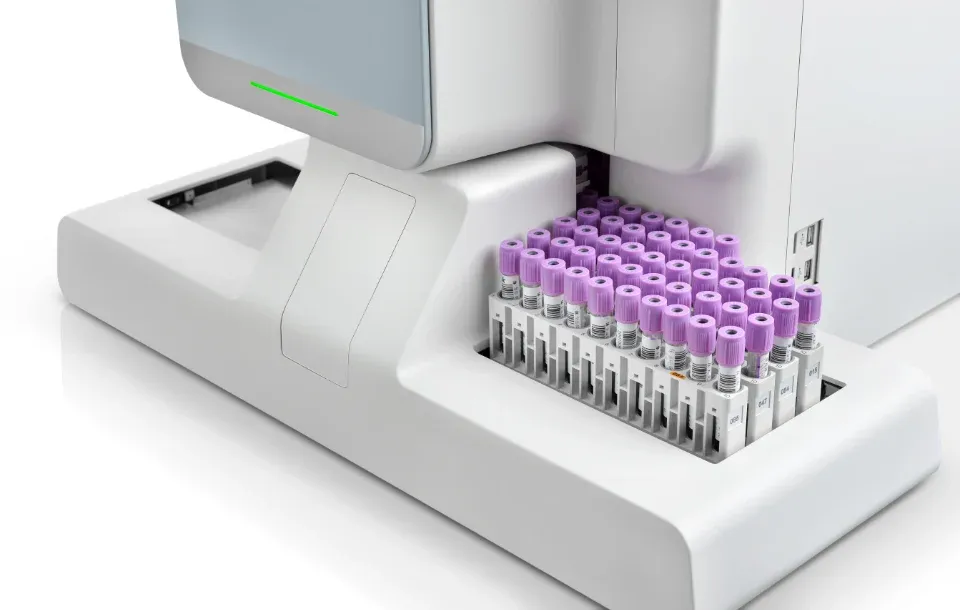
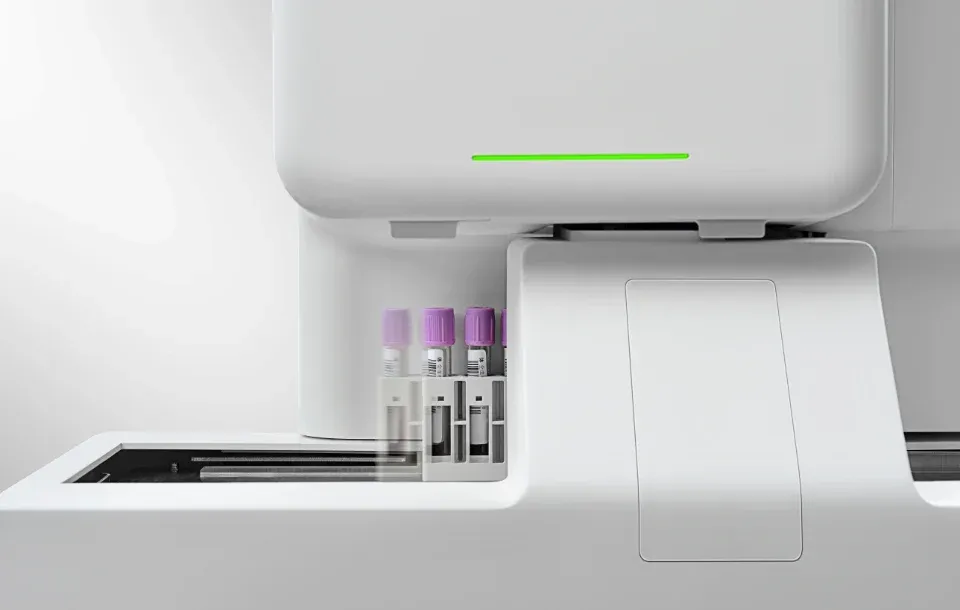
- High Throughput & Efficiency: The analyzer can process up to 110 tests per hour (CBC+DIFF) and load up to 50 samples at a time.
- Low Sample Volume: It requires only 80μL of whole blood or 35μL of capillary blood for a CBC+DIFF test with NRBC results, making it efficient in its use of reagents and samples.
- Automatic Rerun & Reflex: If sample results trigger specific criteria, the autoloader can automatically rerun or perform a reflex check, reducing manual intervention and improving workflow efficiency.
- Accurate Results: The use of a new fluorescent dye ensures more accurate reticulocyte (RET) and optical platelet (PLT-O) results due to stronger fluorescent signals. A platelet clump de-aggregation function also helps improve test precision for thrombocytopenia samples.
Principles of Operation
The Mindray BC-6200 employs multiple detection methods to ensure accurate and reliable results:
- SF Cube method: Used for counting White Blood Cells (WBC), 6-part differential, NRBC, Reticulocytes, and PLT-O.
- DC Impedance method: Used for Red Blood Cell (RBC) and Platelet counting.
- Colorimetry: Used to measure hemoglobin concentration.
Reviews & Clinical Performance
Clinical evaluations, such as those published in medical journals, indicate that the BC-6200 provides excellent clinical performance, with high correlations for CBC parameters and high consistency for leukocyte differentials and NRBCs when compared with manual microscopy. It has been praised for its high sensitivity and specificity in flagging blasts and NRBCs. Its ability to screen for potential malaria infections has also been noted as an additional clinical value.